



China Rejects Anthropic CEO’s Call to Limit AI Development

Share
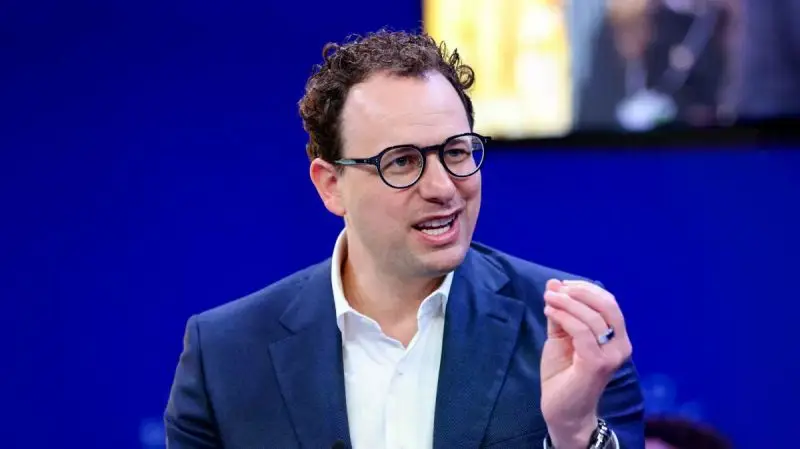
China’s Ministry of Foreign Affairs has rejected calls from Anthropic CEO Dario Amodei to limit the nation’s artificial intelligence capabilities, describing the proposals as “fearmongering”.
Amodei recently published an essay arguing that a Chinese lead in AI would pose a grave danger to the United States and the world. He advocated for sustained restrictions on the sale of advanced AI chips and semiconductor manufacturing equipment to China to preserve the American technological edge.
In his essay, Amodei warned that a swarm of autonomous AI “agents” could potentially take over the internet within six to 12 months unless researchers agree to a global slowdown in development. He noted that achieving such a pacing would require cooperation with China.
During a press conference, Ministry spokesperson Guo Jiakun stated that confrontation and “vicious competition” would only serve to disrupt the progress of global AI governance. The state-run Global Times echoed this sentiment, describing Amodei’s essay as a “Cold War playbook” designed to contain China’s technological growth.
The diplomatic friction follows a joint cybersecurity advisory from the FBI, the National Security Agency (NSA), and the Cybersecurity and Infrastructure Security Agency (CISA). The advisory alleged that Chinese developers have engaged in “aggressive, malicious” efforts to extract capabilities from advanced American models, such as Anthropic’s Claude and OpenAI’s GPT, using a technique known as “distillation”.
China’s Commerce Ministry has dismissed these claims as groundless, arguing that distillation is a standard practice used by many AI firms. The ministry further accused the United States of attempting to maintain a monopoly within the AI industry.
Lizzi C. Lee, a fellow at the Asia Society Policy Institute, highlighted the difficulty of the current situation. She observed that if the U.S. seeks cooperation on frontier safety while simultaneously restricting access to the compute power required for that safety, the path to meaningful cooperation remains unclear.
While Amodei called for a slowdown, U.S. President Donald Trump downplayed the idea of intervention, stating that the United States is currently leading in the field and asserting that “whoever wins AI, wins.”
These developments occur as U.S. President Donald Trump and Chinese leader Xi Jinping are expected to discuss AI governance during a meeting scheduled for 24 September.
















Leave a Reply