China Moves to Restrict AI Exports as US Technology Rivalry Intensifies

Share
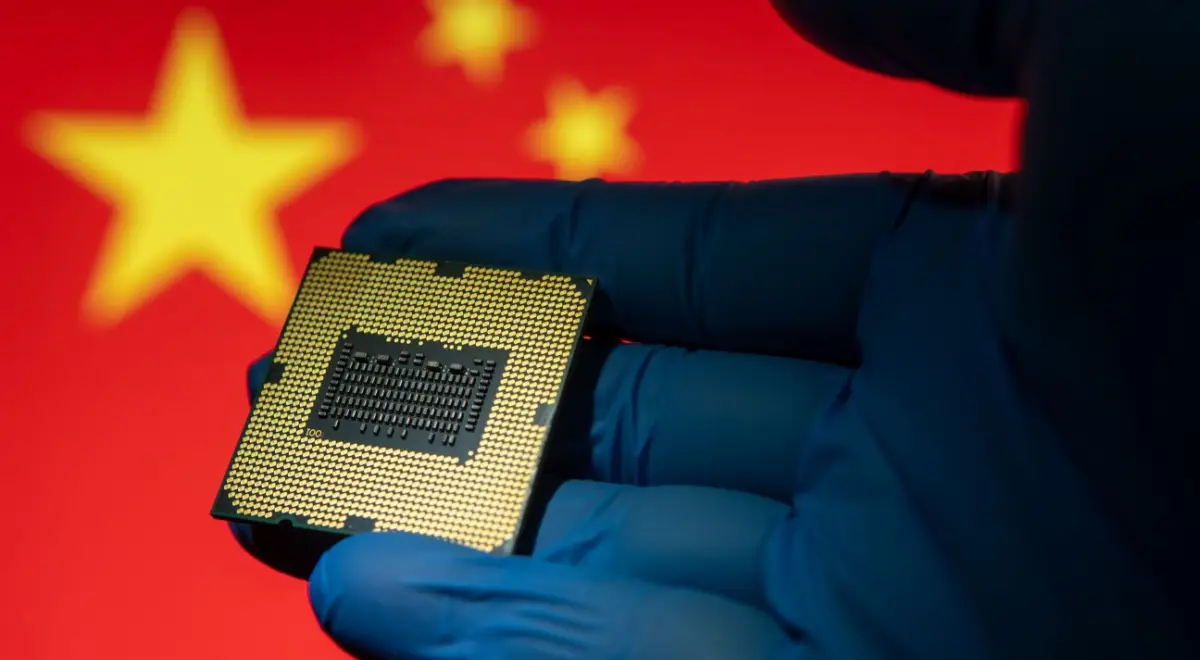
China Moves to Restrict AI Exports as Technology Rivalry With US Intensifies
- China Targets 23 AI Technologies in Major Export Control Move
- China Plans New Restrictions on Advanced AI Models and Technology
- China Tightens Oversight of AI Exports as Global Tech Tensions Rise
- Chinese AI Models Face New Export Rules as Beijing Expands Controls
China has proposed new export controls covering advanced artificial intelligence technologies, chip design and other strategic industries, raising fresh questions about the future of global AI development and access to Chinese technology.
The proposal, announced on October 16, 2026, covers 40 technologies across artificial intelligence, solar power and biomedicine. Of these, 23 are related to AI, including advanced large language models, AI agents and computing infrastructure used to develop powerful AI systems. The move comes as China and the United States compete for leadership in artificial intelligence, advanced computing and other technologies considered essential to economic growth and national security.
If adopted, the proposed restrictions could affect how Chinese companies transfer advanced AI technology to foreign businesses, license intellectual property overseas and restructure ownership of sensitive technology assets.
However, the proposal does not amount to a blanket ban on Chinese AI services worldwide. People outside China would generally still be able to access services through websites, applications, application programming interfaces (APIs) and software-as-a-service platforms, subject to applicable rules.
China Targets 23 Artificial Intelligence Technologies
The draft rules were jointly published by China’s Ministry of Commerce and Ministry of Science and Technology as part of a broader revision of the country’s catalogue of technologies subject to export restrictions.
The proposed changes would bring additional AI technologies under government oversight, particularly those that Beijing considers strategically important or potentially dangerous if transferred without adequate controls.
The technologies under consideration include:
- Advanced large language models capable of performing complex tasks.
- AI agents that can carry out actions with limited human intervention.
- Computing clusters used to train and operate powerful AI systems.
- Certain chip-design technologies and other advanced technical capabilities.
- AI technologies associated with sensitive national data and security-related applications.
The proposal also covers technologies in solar energy and biomedicine, reflecting China’s wider effort to control the international transfer of strategically important innovations.
Chinese officials have cited national security and the prevention of technological misuse as reasons for the proposed controls.
The concern is that certain advanced AI capabilities could potentially be exploited to attack critical infrastructure, support malicious cyber operations or threaten sensitive government and industrial systems.
Which Chinese AI Models Could Be Affected?
The proposed rules could have significant implications for developers working on some of China’s most advanced AI systems.
According to reporting on the draft, the proposed controls include technologies associated with models that have at least two trillion parameters, as well as models that rank among the world’s leading systems based on performance, usage or safety measures. The discussion has brought attention to Chinese AI developers such as Moonshot AI and Alibaba, whose models include Kimi and Qwen.
However, the proposal should not be interpreted as confirmation that every model from these companies will be prohibited from reaching international users. The restrictions concern specified technologies and transfers covered by the rules, rather than automatically banning every product developed by a Chinese AI company.
The precise impact will depend on the final regulations, the technologies involved and the circumstances of individual exports.
For AI developers and international partners, the distinction between exporting a model’s underlying technology and providing access to a hosted service could become particularly important.
Foreign Users Could Still Access Chinese AI Services
One of the most significant distinctions in the proposal is the treatment of technology exports compared with access to online AI services.
The draft indicates that overseas users would generally retain access to Chinese AI services through APIs, websites, applications and software-as-a-service platforms. Open-source technologies and research already in the public domain would also generally remain outside the proposed restrictions.
This distinction could allow Chinese developers to continue serving international customers while facing tighter controls over the transfer of restricted technology.
For example, an overseas business might still be able to use an eligible Chinese AI model through an online service without receiving the underlying model weights, source code or other restricted technical assets.
The arrangement could help Chinese companies preserve international access to their products while giving Beijing greater oversight of how sensitive AI capabilities are transferred abroad.
Nevertheless, individual services and transactions may be subject to other applicable laws, licensing requirements or restrictions.
China Introduces Registration Requirements for Certain Transfers
Alongside the proposed catalogue changes, China introduced a temporary registration requirement covering certain exports and transfers of the technologies under consideration.
The measure took effect on October 16 and applies to specified transactions, including some technology ownership transfers, overseas licensing arrangements and changes that place domestic technology assets under foreign control. It also covers certain transactions that began but had not been completed.
This requirement is significant because it gives authorities greater visibility into cross-border transactions involving sensitive technologies while the broader proposal undergoes consultation.
Businesses involved in AI development, licensing, mergers and acquisitions or international intellectual property arrangements may need to determine whether their activities fall within the scope of the new requirements.
The registration obligation should not be confused with a final prohibition on every covered transaction. Registration, licensing and export approval are distinct regulatory mechanisms, and the outcome depends on the applicable rules.
Why China Is Tightening Control Over AI Technology
Artificial intelligence has become a major source of economic and geopolitical competition.
Governments increasingly view advanced AI systems as strategic assets because they can support scientific research, industrial automation, cybersecurity, military applications and other sensitive activities.
China’s proposed controls reflect its desire to retain oversight of technologies developed domestically, particularly where international transfers could have national security implications.
The move also comes after years of restrictions imposed by the United States on China’s access to certain advanced semiconductor technologies and computing capabilities.
These measures have made access to advanced chips, AI infrastructure and specialised technical expertise central issues in the broader US-China technology dispute.
Beijing’s proposal represents another effort to strengthen its ability to regulate sensitive technology transfers, although the exact economic and geopolitical effects will depend on the final scope of the rules.
What the Proposed Rules Mean for Chinese AI Companies
For Chinese AI developers, the new controls could create additional compliance requirements when expanding overseas.
Companies may need to review whether their models, training technologies, source code, intellectual property or licensing arrangements fall within restricted categories.
Potential consequences include:
- Additional regulatory reviews for some international technology transfers.
- Greater scrutiny of cross-border intellectual property licensing.
- More compliance work for overseas partnerships and acquisitions.
- Potential delays in transactions involving restricted AI technologies.
- Increased importance of distinguishing hosted AI services from transfers of underlying technology.
The measures could also affect foreign investors considering acquisitions or investments involving Chinese AI businesses.
Companies planning cross-border transactions may need specialist legal advice to determine whether registration, licensing or other approvals are required.
At the same time, the continued availability of eligible online AI services and public-domain technologies could help preserve some international commercial opportunities.
Could the Restrictions Affect Global AI Development?
The consequences could extend beyond China if the controls affect access to advanced models, research capabilities or technologies used by international developers.
Many AI businesses rely on a combination of models, computing infrastructure, software tools and research developed across multiple countries.
Restrictions on transferring certain technologies could complicate international collaboration, particularly for companies that want to obtain model weights, license specialised systems or incorporate restricted technical assets into their own products.
However, the proposal’s exclusions for online services and technologies already in the public domain could limit some of these effects.
The final impact will depend on which technologies are ultimately restricted, how the rules are implemented and whether foreign companies can find suitable alternatives.
For developers, the immediate challenge is understanding which activities remain permissible and which require additional regulatory scrutiny.
Public Consultation Continues Until November 15
China’s proposed catalogue changes were released for public consultation, with comments due by November 15, 2026. The final version could clarify which technologies will be prohibited, which will require restrictions or licensing, and how the rules will apply to different types of international transfers.
Until the final requirements are established, businesses should avoid assuming that every technology listed in the proposal will automatically face the same level of restriction.
Companies with exposure to Chinese AI technology can use this period to review their international licensing agreements, technology transfers and investment plans.
The consultation will also provide an opportunity for businesses and industry stakeholders to identify potential operational challenges.
What Happens Next in the US-China AI Race?
China’s proposed export controls underline how artificial intelligence is becoming both a commercial product and a strategic national asset.
The approach seeks to preserve international access to some Chinese AI services while placing tighter oversight on transfers of sensitive underlying technologies.
For global AI companies, the distinction could shape decisions about partnerships, licensing, product development and international expansion.
The proposal does not establish a universal ban on Chinese AI, but it signals that access to certain advanced technologies may increasingly depend on government oversight.
As the consultation progresses, AI developers, investors and businesses worldwide will be watching for details that determine how the new framework affects international technology trade.
The outcome could influence not only China’s AI industry but also the broader relationship between technological innovation, national security and global cooperation.