



Google Updates Policy on Using AI-Accessed Gmail and Photos Data for Ads

Share
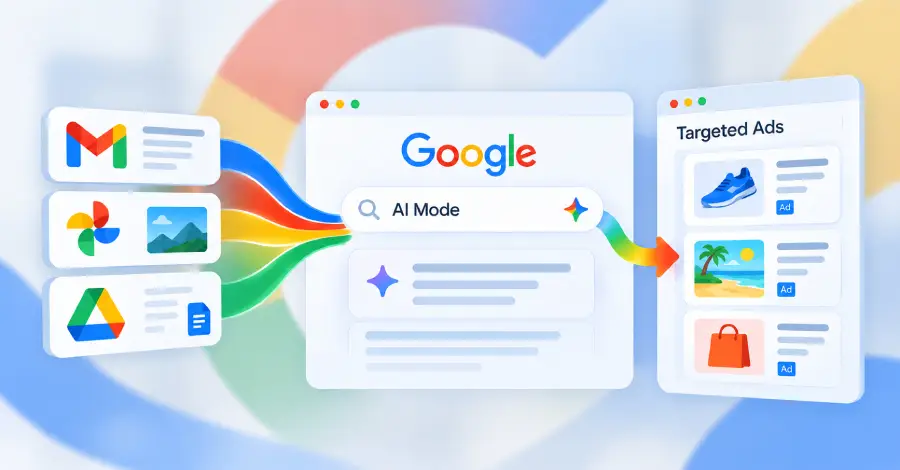
Google has updated its privacy policy to clarify that data from personal services such as Gmail and Google Photos may be used for targeted advertising when users share that information with its artificial intelligence (AI) tools.
The update specifies that using personalised AI features in Google Search or the Gemini assistant can allow the company to serve ads based on activity across other connected Google services. This change highlights how the tech giant is integrating its generative AI ecosystem with its primary revenue driver, digital advertising.
Cross-Service Data Sharing
Under the revised terms, users who choose to allow Gemini or AI-powered Search to access data from other Google services—such as finding a specific receipt in Gmail or a holiday image in Photos—are also permitting that data to influence their ad profile. Google notes that this information helps the company deliver more relevant marketing content to the user.
The Google Privacy Policy now spells out that activity within these AI features is treated as data that can inform the ads a user sees across Google’s platforms. While the company has previously maintained various boundaries between personal communication and advertising, the increasing use of AI extensions that bridge different apps is creating new avenues for data processing.
Privacy Controls and Data Use
Despite the policy update, Google maintains that it does not use the actual content of emails, documents or photos to train its large language models (LLMs) without explicit user permission. However, the metadata and the context of the user’s interaction with the AI assistant are eligible for use in ad targeting once the connection is established.
Users who are concerned about this level of data integration can manage their preferences through the Gemini Apps activity settings. Within these controls, individuals can view, delete or disable the history of their interactions with Google’s AI tools, which may limit the data available for personalised advertising.
The move comes as regulators worldwide scrutinise how AI companies handle consumer information. By updating its policy documentation, Google appears to be seeking a clearer legal basis for its data practices as it shifts from traditional search to an AI-first model.










Leave a Reply