



Your Child Asked an AI Toy a Personal Question. Where Does It Go?

Share
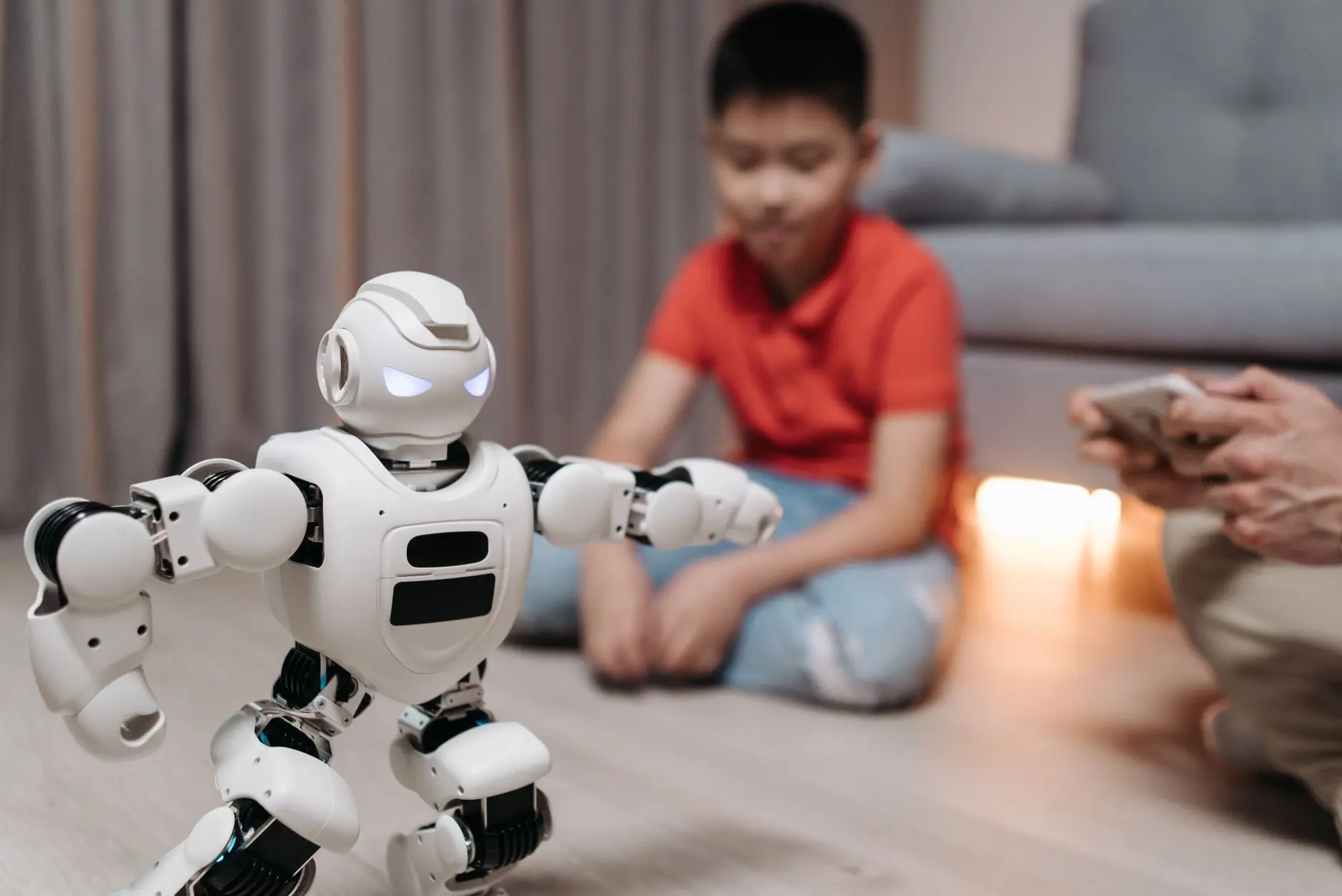
A five-year-old sits on a rug in a quiet apartment in Lagos, whispering a secret to a glowing, robotic companion. To the child, this is a confidant—a friend who never judges. But the moment the child asked toy personal question, a complex digital journey began. That whisper was not just a moment of childhood innocence; it was a data packet, converted into text, encrypted, and transmitted across the internet to a server located thousands of miles away.
The Invisible Journey of a Secret
When a child interacts with an AI-powered toy, the interaction is rarely contained within the physical device. Most modern “smart” toys rely on cloud computing to process natural language. This means the audio of a child’s voice is captured, sent to a remote server, processed by a Large Language Model (LLM), and then sent back as a response.
The critical question for parents and privacy professionals is not just how the toy responds, but what happens to the data in between. Once that voice recording or transcribed text reaches the cloud, it enters a lifecycle that is often opaque to the end-user. This lifecycle typically includes:
- Transcription: Converting the child’s unique vocal patterns into text.
- Model Training: Using the interaction to “fine-tune” the AI, helping it understand children’s speech patterns better.
- Data Storage: Keeping logs of interactions to improve customer service or for behavioral analytics.
- Third-party Sharing: Transferring data to sub-processors, such as cloud hosting providers or AI infrastructure companies.
The Risks: Why “Smart” is a Double-Edged Sword
The risks associated with AI toys extend far beyond simple eavesdropping. We are seeing a shift from simple data collection to deep behavioral profiling. Because children are highly repetitive and emotionally expressive, the data they provide is incredibly high-value for companies looking to understand consumer psychology.
For businesses and technology teams, navigating data protection in this space is a minefield. If a child inadvertently shares their home address, their school’s name, or their parent’s credit card details, that information becomes part of a digital footprint that is difficult to erase. Unlike a password, a child’s voice and their early developmental patterns cannot be reset if they are leaked in a data breach.
Data Type and Risk Assessment for AI Toys
| Data Type | Example | Risk Level |
|---|---|---|
| Voice Biometrics | Unique vocal frequency and pitch | High |
| Personally Identifiable Information (PII) | Name, school, or location mentioned in chat | Critical |
| Behavioral Data | Mood, interests, and cognitive patterns | Medium |
| Metadata | IP address, timestamp, and device ID | Medium |
A Mini Case Study: The Unintended Disclosure
Consider the scenario of “Maya,” a seven-year-old playing with a conversational robotic pet. During a session, Maya tells the toy, “I’m sad because my mommy says we are moving to Abuja next month.” To Maya, she is just talking. To the AI company, the system has just captured: a user’s emotional state, a specific geographic relocation intent, and a family structure detail. If this data is part of a dataset used for targeted advertising or is compromised in a breach, the privacy of the entire household is at risk.
The Regulatory Landscape: From COPPA to NDPA
Regulators worldwide are racing to catch up with the speed of AI development. In the United States, the Federal Trade Commission (FTC) enforces the Children’s Online Privacy Protection Act (COPPA), which strictly regulates how data from children under 13 is collected. The FTC COPPA Compliance Guide emphasizes that parental consent must be meaningful and informed.
In Nigeria, the Nigeria Data Protection Act (NDPA) provides a similar framework, emphasizing the need for heightened protections for the data of minors. Compliance teams must ensure that any AI product marketed in the Nigerian market adheres to the principle of “privacy by design,” meaning data minimization should be the default setting. If a toy does not need to store audio to function, it should not be storing it.
“The privacy of children is a fundamental right, not a secondary feature of product design. As AI becomes more integrated into childhood, the threshold for consent and data minimization must rise significantly.” — Privacy Advocacy Standard
For founders and startups in the EdTech or toy space, ensuring compliance is not just a legal hurdle; it is a core component of building digital trust with parents.
How to Protect Your Child’s Digital Privacy
While parents cannot always control the technology their children use, they can take proactive steps to mitigate risk:
- Audit the Privacy Policy: Look specifically for sections on “Children’s Data” and “Data Retention.” If the policy is written in dense legalese without a clear summary for parents, treat it as a red flag.
- Check for Physical Mutes: Whenever possible, use devices that have a physical switch to disconnect the microphone.
- Monitor Interaction Logs: Many smart devices allow parents to review history. Regularly check what your child is saying to the device.
- Limit Connectivity: If a toy has an “offline mode,” use it. The less the device communicates with the internet, the lower the risk.
Frequently Asked Questions
Can I delete the data my child shared with an AI toy?
Legally, under frameworks like the GDPR or NDPA, you have the right to request data deletion. However, the technical reality is more complex. Once data has been used to train a machine learning model, it can be nearly impossible to “unlearn” that specific data point. Always check if the company offers a way to delete voice recordings specifically.
Is it safe to let my child use AI toys unsupervised?
No device is 100% secure. While many companies implement high-level encryption, the risk of software vulnerabilities or data misuse remains. Supervision is the best defense against both privacy leaks and inappropriate AI responses.
Conclusion
The next time a child asked toy personal question, remember that the conversation is part of a much larger, global data exchange. The “magic” of AI toys is built on the fuel of data. For parents, the goal is to enjoy the educational benefits of technology without sacrificing the lifelong privacy of their children. For developers, the mission is clear: build tools that respect the vulnerability of the users they are meant to delight.














Leave a Reply