



CISOs Face Board Scrutiny on Security Risk and Financial Exposure

Share
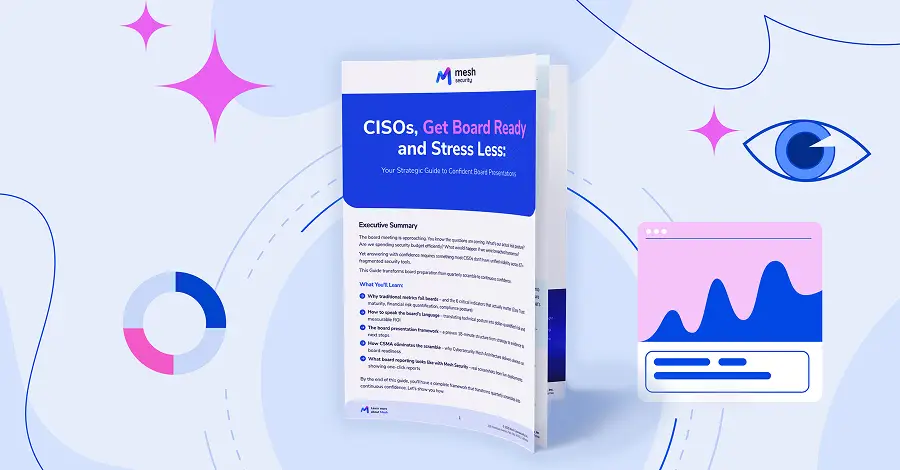
The quarterly ritual of preparing security reports for the board often leaves Chief Information Security Officers (CISOs) struggling to provide confident answers to critical questions. Boards increasingly demand to know an organization’s overall security posture, actual financial exposure to cyber threats, and whether security is genuinely improving quarter-over-quarter. However, traditional reporting methods, reliant on fragmented data from numerous security tools, often fail to deliver these insights.
The challenge arises because security teams typically aggregate data from disparate systems—including identity providers, cloud posture tools, vulnerability scanners, security information and event management (SIEM) systems, and endpoint detection and response (EDR) consoles. While each tool provides accurate information within its specific domain, they rarely offer the shared context needed to understand interconnected risks across the enterprise. This disconnect makes it nearly impossible for CISOs to present a unified view of risk.
Boards Demand Exposure, Not Activity Metrics
Boards have grown wary of “activity metrics” such as the number of vulnerabilities closed or patches applied. These figures indicate effort but provide little insight into actual risk reduction. A board member hearing about thousands of findings being addressed has no clear way to gauge if the company is safer, or “safer from what, and by how much.” What boards truly seek is clarity on potential exposure, observable trends in that exposure, and the financial impact of potential compromises.
Consider a realistic attack path that traditional tools might miss: an expired contractor account with an identity provider retains group membership from a completed project. This group grants access to a SaaS application, which in turn has an OAuth integration into the cloud environment. The SaaS integration runs under a service account with broad storage permissions, where sensitive customer records reside. While individual tools might flag minor issues—the identity tool low-risk, the cloud posture tool medium—no single dashboard connects these seemingly minor findings into a critical path from a phishable account to sensitive data. Such pathways are often discovered during an actual incident, not in a board report.
The rapid adoption of artificial intelligence (AI) further exacerbates this problem. AI agents, non-human identities, service accounts, and cloud-connected tools are being deployed at an accelerating pace, often without comprehensive inventory or mapping of their access privileges. This creates new, often unseen, attack paths and “shadow AI” instances that bypass existing security visibility.
Shifting to a Cybersecurity Mesh Architecture Approach
Addressing this visibility gap doesn’t necessarily mean acquiring yet another security tool. Instead, the focus should shift to creating shared context between existing controls. This approach aligns with the concept of Cybersecurity Mesh Architecture (CSMA), a model advocated by Gartner. CSMA proposes connecting distributed security tools through a common intelligence layer, correlating data from identities, access, assets, and exposures into a single, comprehensive graph. This allows security leaders to move beyond siloed alerts and visualize genuine attack paths.
A practical framework for building board-ready security reports around exposure includes several key steps:
- Define Crown Jewels with Business Owners: Identify the most critical business assets, such as customer data, payment systems, protected health information (PHI), source code, or production infrastructure. This list must be agreed upon with business stakeholders, not just the security team.
- Correlate Existing Data: Integrate identity, cloud, endpoint, SaaS, and vulnerability data into a unified, correlated view. The objective is to enrich and deduplicate information, leveraging existing sensors via agentless, API-based integrations.
- Map Real Attack Paths: Transition from lists of individual findings to illustrating concrete attack paths. For each crown jewel, demonstrate which human and non-human identities could reach it, detailing the chain of access and misconfigurations involved.
- Prioritise by Blast Radius: Rank remediation efforts based on their potential to cut off significant attack paths, rather than relying solely on individual severity scores. A medium-severity misconfiguration leading to customer data, for instance, should take precedence over a critical CVE on an isolated test server.
- Translate Exposure to Financial Terms: Quantify the financial impact of compromising each reachable crown jewel. This requires collaboration with finance and risk teams, shifting the reporting language from “number of vulnerabilities” to “dollars at risk,” a metric already familiar to boards.
- Report the Trend: Show progress quarter-over-quarter by indicating how many attack paths to critical assets existed previously, how many exist now, and which remediation activities were responsible for eliminating them. This directly demonstrates the return on investment (ROI) of security efforts.
By adopting an exposure-centric reporting model, CISOs can provide definitive answers to the board’s toughest questions: “How secure are we?” becomes “Here are the remaining viable paths to our most critical assets.” “What is our financial exposure?” becomes “Here is the estimated impact if those paths are exploited.” And “Are we improving?” transforms into “Here is how many critical paths were eliminated since last quarter.” This fundamental shift empowers CISOs to report measurable risk reduction, aligning security efforts with broader business objectives and fostering greater trust in the boardroom.







Leave a Reply