Critical FortiMail Zero-Day Exploited in Attacks, CISA Issues Warning

Share
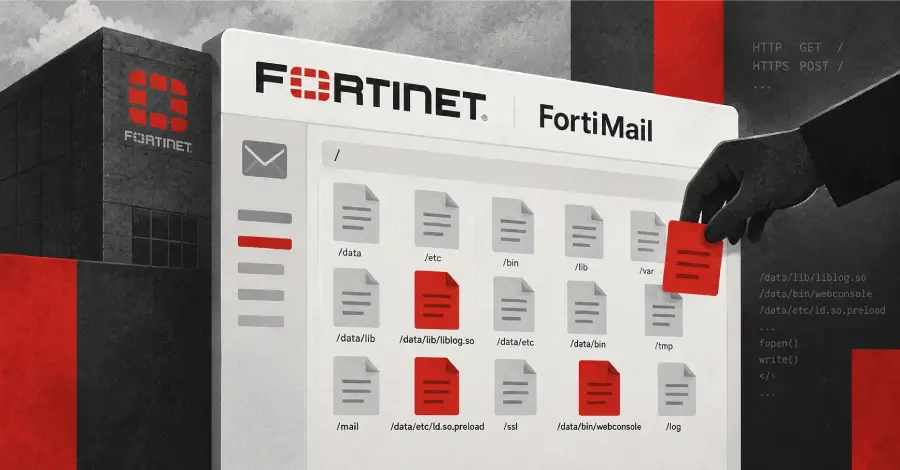
The U.S. Cybersecurity and Infrastructure Security Agency (CISA) has issued a stark warning regarding a critical zero-day vulnerability in Fortinet FortiMail email security appliances, confirming its active exploitation in the wild. The flaw, identified as CVE-2026-104286 with a CVSS score of 9.8 (Critical), allows unauthenticated attackers to write arbitrary files onto the underlying system.
CISA, the leading U.S. government agency for cybersecurity, added the FortiMail flaw to its Known Exploited Vulnerabilities (KEV) catalogue on Thursday. This addition mandates that Federal Civilian Executive Branch (FCEB) agencies apply patches or specified workarounds by October 4, 2026, highlighting the urgency of the threat.
Fortinet, the vendor of FortiMail, acknowledged the active exploitation in a security advisory. The company detailed that the vulnerability stems from an improper limitation of a pathname to a restricted directory (‘path traversal,’ CWE-22) combined with improper neutralisation of NULL byte or NULL character (CWE-158). This combination enables unauthenticated attackers to write arbitrary files via crafted HTTP or HTTPS requests.
Affected Versions and Mitigation Steps
The critical flaw impacts several FortiMail versions:
- FortiMail 8.0.0 through 8.0.1 (upgrade to upcoming 8.0.2 or above)
- FortiMail 7.6.0 through 7.6.6 (upgrade to upcoming 7.6.7 or above)
- FortiMail 7.4.0 through 7.4.8 (upgrade to upcoming 7.4.9 or above)
- FortiMail 7.2.0 through 7.2.9 (upgrade to branch 7.4 or above)
Until patches are universally available for all affected versions, Fortinet has advised customers to implement the following workarounds immediately:
- Disable the IBE (Identity Based Encryption) feature support using the CLI command:
config system encryption ibe set status disable end - Restrict access to the FortiMail management interface, either by disabling internet access entirely or limiting it to trusted private networks only.
Fortinet credited Gwendal Guégniaud of its Product Security team for discovering and reporting the vulnerability. The company has also shared several indicators of compromise (IOCs) to help organisations detect potential exploitation, including specific IP addresses (79.141.169[.]187, 45.129.0[.]192) and malicious files that may be added or modified on compromised systems, such as /data/lib/liblog.so, /data/bin/webconsole, /data/bin/mailservice, and /data/etc/ld.so.preload.
The exploitation of this FortiMail zero-day comes amidst a period of heightened activity, with CISA also recently adding several other critical flaws to its KEV catalogue due to in-the-wild exploitation. These include vulnerabilities in products from Check Point, Arista VeloCloud Orchestrator, F5 BIG-IP Access Policy Manager, Cisco Catalyst SD-WAN Manager, and Citrix NetScaler ADC and NetScaler Gateway. Organisations are strongly urged to review their systems and apply all recommended patches and mitigations without delay.