



SOCs Grapple with Identity Blind Spots as Machine and AI Identities Proliferate

Share
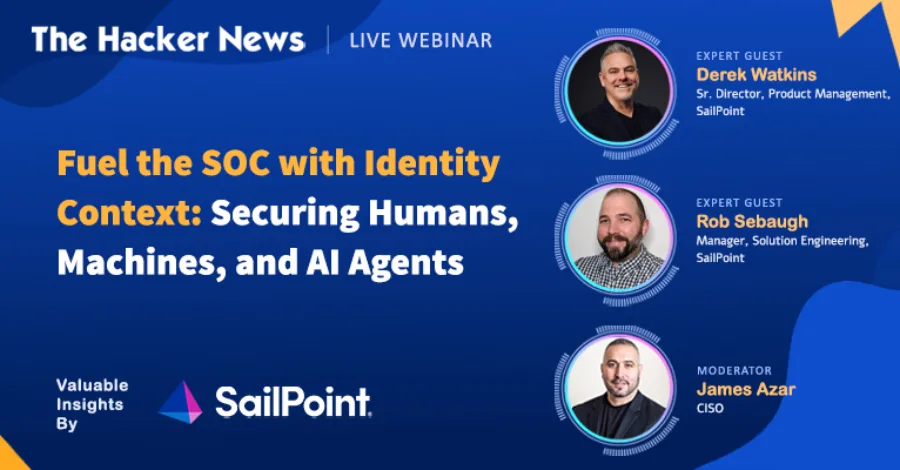
Security Operations Centres (SOCs) are grappling with a critical blind spot in their threat detection and incident response capabilities: a profound lack of identity context. Despite having more alerts and monitoring tools than ever, SOC analysts often struggle to quickly identify the ‘who’ or ‘what’ behind suspicious activity, leading to slower investigations and increased organisational risk.
This challenge is significantly compounded by the proliferation of diverse identities within modern enterprise networks, extending far beyond traditional human users. Organisations now rely heavily on service accounts, API keys, automated workloads, and increasingly, autonomous artificial intelligence (AI) agents, all of which require access to sensitive systems and data.
When an alert is triggered – perhaps for a suspicious login or an unusual API call – a Security Information and Event Management (SIEM) or Endpoint Detection and Response (EDR) system might flag the activity. However, without immediate context regarding the identity’s owner, its permissions, and the systems it can access, the SOC is missing crucial information to effectively respond.
For instance, a compromised service account could allow an attacker to move laterally across the network, but determining its full access scope and potential impact can be a time-consuming manual process. Similarly, an AI agent accessing sensitive data with unreviewed permissions poses a significant, often overlooked, risk. Delayed understanding can escalate a minor incident into a major breach, while an incorrect response could disrupt critical business operations.
Cybersecurity experts are increasingly advocating for the integration of real-time identity context into SOC workflows. This approach aims to bridge the gap between Identity and Access Management (IAM) teams, who understand ‘who has access to what,’ and security operations teams, who monitor for threats.
By enriching security alerts with identity intelligence, SOC analysts can:
- Investigate faster: Quickly identify whether a human, machine, or AI identity is involved in suspicious activity.
- Assess real risk: Understand the identity’s permissions, connected systems, and potential for lateral movement.
- Contain threats safely: Respond to compromised credentials without unnecessarily disrupting critical automated processes.
- Improve collaboration: Foster shared workflows, clear escalation paths, and common response goals between IAM and SOC teams.
The core objective is to move beyond merely knowing that something suspicious happened to understanding its full potential impact and how to effectively stop it. By embedding comprehensive identity context, organisations can transform raw alerts into actionable intelligence, enabling faster, more confident incident response and strengthening overall cyber resilience.

















Leave a Reply