



Ransomware Total Costs Often Exceed Initial Payments

Share
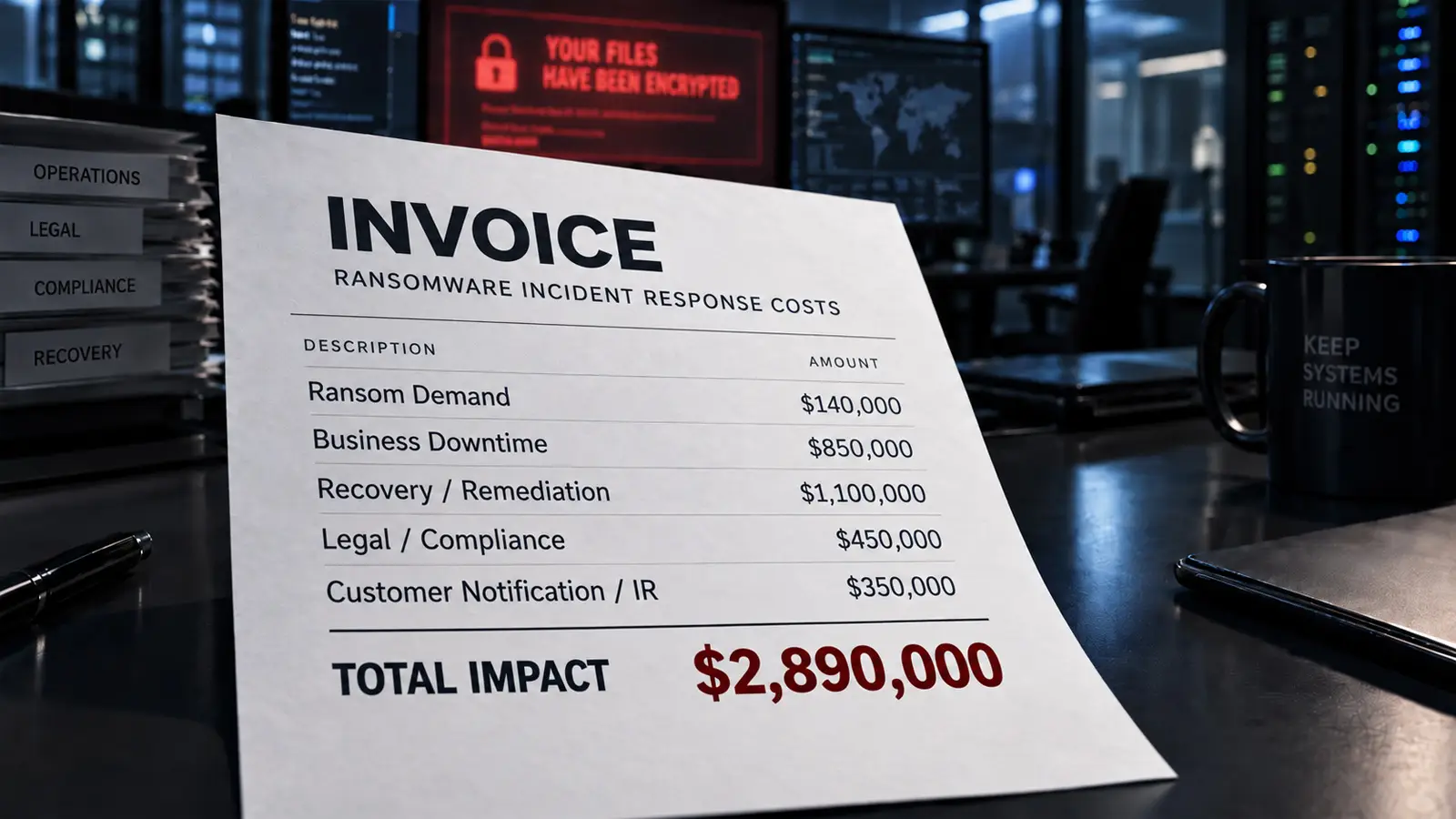
While the ransom demand is the most visible aspect of a ransomware attack, it represents only a fraction of the total financial impact. Research indicates that the true cost of these incidents is driven primarily by operational downtime, remediation efforts, and legal obligations.
According to the IBM Cost of a Data Breach Report 2025, the average total cost of a ransomware incident has reached $5.08 million when accounting for business disruption, remediation, and legal work. This stands in stark contrast to the median ransom payment of $139,875 reported in the 2026 Verizon Data Breach Investigations Report.
The Drivers of Ransomware Expenses
The financial burden of an attack is multifaceted. Beyond the initial payment, organisations face lost revenue during system outages, the high cost of forensic investigations, and the necessity of rebuilding compromised infrastructure. IT teams are often diverted from standard operations to manage emergency recovery, further increasing internal costs.
Downtime remains one of the most significant cost drivers. The longer critical systems remain unavailable, the greater the impact on productivity, transactions, and customer service. For many mid-market businesses, recovery time serves as a critical financial metric rather than a purely technical one.
The Recovery Gap
There is a notable discrepancy between how prepared organisations believe they are and their actual recovery capabilities. The Datto State of BCDR Report 2025 found that while more than 60% of organisations thought they could recover from an incident in under a day, only 35% successfully met that target.
The difficulty is compounded by attackers who increasingly target backup infrastructure. If backups are compromised, organisations may be forced to undertake expensive system rebuilds and forensic audits to ensure new environments are clean and free of persistent threats.
Regulatory and Compliance Pressures
Legal requirements add a layer of complexity and cost to the recovery process. The EU’s General Data Protection Regulation (GDPR) mandates that organisations notify authorities of a qualifying personal data breach within 72 hours of becoming aware of it. In the United States, the SEC requires public companies to disclose material cybersecurity incidents within four business days.
These strict timelines require rapid incident response and investigation, often necessitating external legal and forensic support to manage regulatory exposure and notification obligations while simultaneously addressing the technical crisis.
Mitigating Impact Through Resilience
A mature business continuity and disaster recovery (BCDR) strategy aims to reduce the window of disruption. Technical measures such as write-once-read-many (WORM) storage can provide immutable backups, preventing ransomware from modifying or deleting recovery points. Additionally, machine learning-based anomaly detection can help identify unusual patterns in backup activity, providing a cleaner path to operational restoration.











Leave a Reply